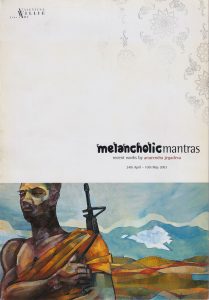
Anurendra Jegadeva
Melancholic Mantras
In Melancholic Mantras, Anurendra Jegadeva utilized the figurative tradition to investigate the specificities of the Malaysian Indian experience and the broader psychic landscapes of the diaspora. Staged shortly after his completion of an MFA at Monash University, the exhibition marked a significant conceptual shift toward using “inventive formats” such as serial portraits and multi-panel narratives to navigate the “sporadic bedlam” of contemporary social and political life.
The works, including The Story of the Malaysian Indians in 10 Common Cities, employ a satirical lens to deconstruct “Indian clichés” while addressing darker themes of “incipient violence, injustice, and political strife.” By integrating domestic still-lives with more provocative imagery, such as his “armed monks,” Anurendra framed the act of painting as a repetitive, meditative process, a visual “mantra” intended to process the tensions of “parish and caste.”